The first day after surgery was strange, mostly because it was not dramatic. I had been bracing myself for pain, and instead I got something close to nothing. For almost 24 hours, I did not feel pain in my ankle at all. I went home from the surgery center sleepy and foggy, like my brain was wrapped in cotton. On the way back, we stopped at Panera and grabbed food. It felt almost funny to be doing something so normal right after something so serious. My left leg was wrapped up, my life was suddenly rearranged, and I was still picking out a sandwich.
At home, I mostly slept and watched shows, drifting in and out with that heavy post anesthesia tiredness. The nerve block was doing its job a little too well. I could not even wiggle my toes. I would look down at my foot and try to command it to move, and it just would not. It did not scare me exactly, but it was unsettling. My leg was there, but it did not feel fully mine.
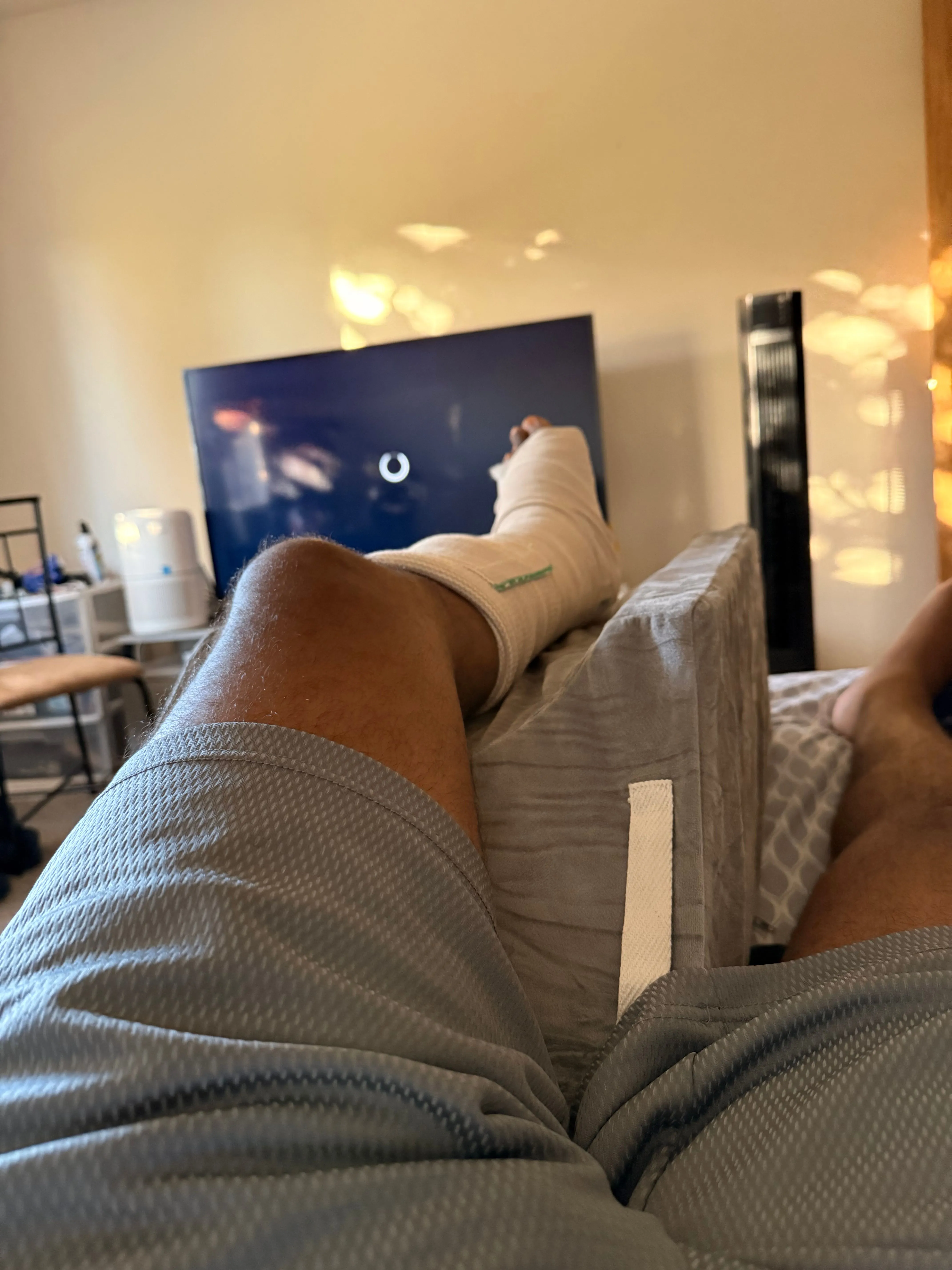
Then, around the 24 hour mark, something shifted. First, I started to regain the ability to wiggle my toes. It was small, but it felt like a message from my body that the nerve block was wearing off. And right after that message came the pain. Not a sore pain, not a tight pain. It was a nasty, sharp pain around the incision site. I kept taking the meds as prescribed, and they helped enough to keep me from spiraling, but the discomfort had officially arrived. That first day felt like borrowed peace. The second day reminded me what had actually happened.
I had been told I would be non weight bearing for two weeks. That sentence sounds simple until you live inside it. Crutches became my best friends and my constant enemies at the same time. Suddenly, tiny things became tasks. Getting water from the kitchen. Going to the bathroom. Carrying anything. Moving from one room to another without feeling like you are doing a workout. It was not just physical. It was mentally exhausting to have to plan every movement, every trip, every little decision.
Sleeping was another adjustment. Keeping my leg elevated meant sleeping on my back, and I am not a natural back sleeper. I tried to make it work with pillows and small adjustments, but comfort was hard to find. So the days blended into a routine of sleep, shows, short trips around the apartment, and long stretches of waiting. My brain was still foggy from anesthesia and pain meds, and time moved in a weird way. Even when I was not doing much, I felt tired.
Showering was probably the worst part of the day. I had to stand on one leg, hold onto the grab bars to keep my balance, and wrap my leg in a plastic cover to keep everything dry. The whole time I was tense. I was trying not to slip, trying not to put weight down by accident, trying not to mess anything up. A shower is supposed to make you feel refreshed. This one made me feel like I had survived something.
Thankfully, I was not doing it alone. Friends helped in ways that were both practical and emotional. A few days after surgery, a friend even flew in to stay with me and help for a week. That support mattered in the obvious ways, like food and errands and having another set of hands. But it mattered even more mentally. Recovery can get quiet, and in that quiet your thoughts get loud. Having someone there made the days feel less heavy.
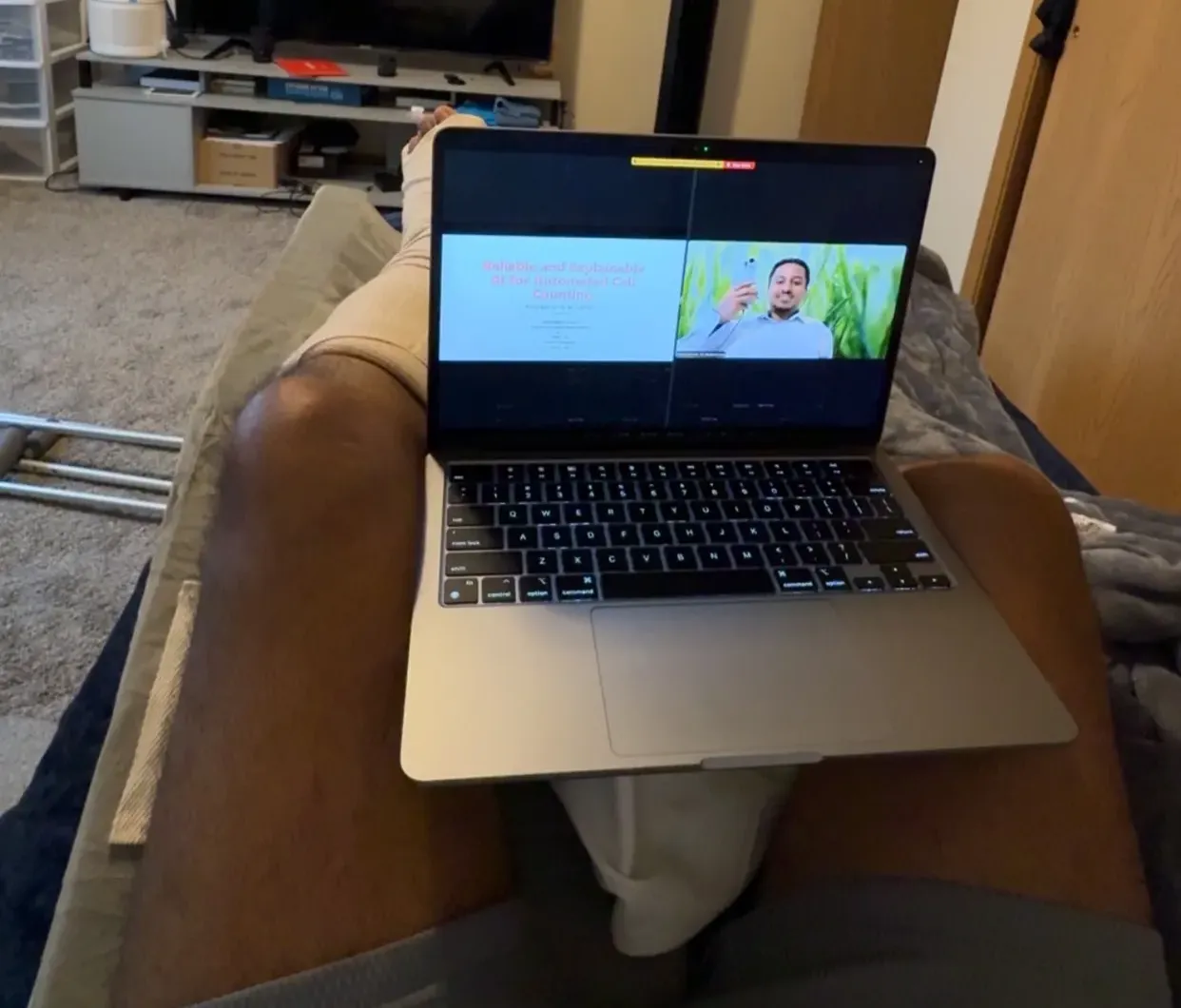
Even while I was healing, one thought kept following me everywhere. My candidacy exam was scheduled exactly two weeks after surgery. That timing bothered me constantly. It was not just that I was recovering. I was recovering with a countdown clock in my head. By the end of the first week, I had to start preparing. Thankfully, a huge part of my slides was already done, but it was still hard. Keeping my leg elevated meant working from bed, and trust me, that is not comfortable at all. If I sat up straight, my leg would go down and start to swell. So I had to lie down, prop my leg up, and work on my laptop like that. Serious thinking in that position is harder than it sounds. You are uncomfortable, you are foggy, and your focus keeps breaking because your body keeps reminding you that you are injured.
But I kept going. Two weeks after surgery, I took the candidacy exam. And I passed. Even now, that feels like one of the proudest moments of this whole journey. It was not just an academic milestone. It was proof to myself that I could still show up while everything else felt unstable.
Two weeks post op was also a milestone for another reason. I had an appointment with the surgeon to check the incision and get the stitches out. That visit felt like the first real checkpoint. It was the moment where recovery stops being theoretical and starts becoming measurable. That is where Part III begins.